Showing posts with label Herbie Hancock. Show all posts

Thursday, October 7, 2010

Peter Johannesson featuring Herbie Hancock: Sixtus (1995)

Peter Johannesson was born in 1962 and started to play the drums at age 12. Two years later, he met legendary jazz pianist Herbie Hancock after a concert in Stockholm. Herbie and his band took an immediate liking to Peter, and invited him to join them for the remainder of their Sweden tour. During the sound check before their concert at Geteborg's Concert Hall, Peter was invited to sit in on the drums, and that exhilarating experience sparked off his life-long urge to create high-energy, spontaneous music.
Tracklist:
1. Bleke (Peter Johannesson)
2. Cyberman (Magnus Lindgren)
3. Sixtus (Peter Johannesson)
4. Jojo (Max Schultz)
5. Tranespotting (Max Schultz)
6. The Garden (Max Schultz)
7. Slowfox for Loners (Max Schultz)
8. Sixtus (live trio version) (Peter Johannesson)
Personnel:
Peter Johannesson - drums
Herbie Hancock - piano, keyboards
Magnus Lindgren - tenor saxophone
Markus Wikstrom - bass
Max Schultz - guitar
Nils Landgren - trombone (1, 2, 3)
Johan Horlen - alto saxophone (2)
Peter Asplund - flugelhorn (2, 3)
Magnus Broo - trumpet (1)
Anders Kjellberg - french horn (1)
Tommy Knutsson - french horn (1)
Hakan Nyqvist - french horn (1)
Bertil Strandberg - euphonium (1)
Hotfile / Depositfiles @ 320K

Tuesday, September 21, 2010

Herbie Hancock: Thrust (1974)

The follow-up to the breakthrough Headhunters album was virtually as good as its wildly successful predecessor: an earthy, funky, yet often harmonically and rhythmically sophisticated tour de force. There is only one change in the Headhunters lineup -- swapping drummer Harvey Mason for Mike Clark -- and the switch results in grooves that are even more complex. Hancock continues to reach into the rapidly changing high-tech world for new sounds, most notably the metallic sheen of the then-new ARP string synthesizer which was already becoming a staple item on pop and jazz-rock records.
Again, there are only four long tracks, three of which ("Palm Grease," "Actual Proof," "Spank-A-Lee") concentrate on the funk, with plenty of Hancock's wah-wah clavinet, synthesizer textures and effects, and electric piano ruminations that still venture beyond the outer limits of post-bop. The change-of-pace is one of Hancock's loveliest electric pieces, "Butterfly," a match for any tune he's written before or since, with shimmering synth textures and Bennie Maupin soaring on soprano (Hancock would re-record it 20 years later on Dis Is Da Drum, but this is the one to hear). This supertight jazz-funk quintet album still sounds invigorating a quarter of a century later.
Tracklist:
01. Palm Grease
02. Actual Proof
03. Butterfly
04. Spank-A-Lee
Thrust
Hotfile / Uploading @ 320K

Sunday, September 5, 2010

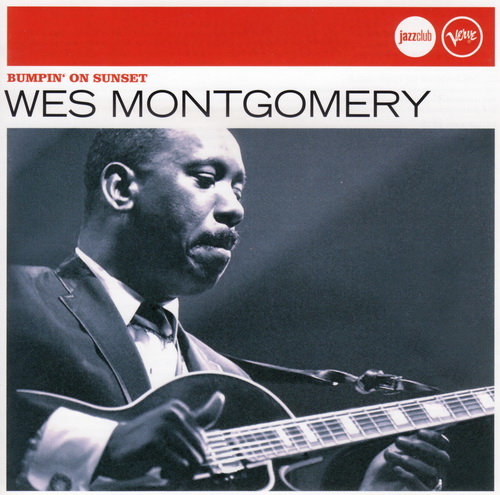
Wes Montgomery - Bumpin' At Sunset (2007)

Superb and fine compilation of Wes Montgomery's tracks with wide range of guest artists as Herbie Hancock, Ron Carter, Paul Chambers and many others.
Tracklist
1. A Day In The Life (5:45)
2. The Shadow Of Your Smile (2:18)
3. Up And At It (4:15)
4. Bumpin' On Sunset (4:50)
5. The Joker (3:26)
6. Movin' Wes (pt. 1) (3:30)
7. Impressions (5:04)
8. Milestones (4:10)
9. The Surrey With The Fringe On Top (5:19)
10. Angel (2:48)
11. Sunny (4:04)
12. O.G.D. (Road Song) (6:06)
13. Tequila (3:21)
14. 13 (Death March) (5:21)
15. Caravan (2:38)
16. The Other Man's Grass Is Always Greener (2:32)
17. What The World Needs Now (4:59)
Bumpin' At Sunset

Hotfile / Uploading @ 320K

Monday, August 16, 2010

Terri Lyne Carrington: Jazz is a Spirit (2002)

In the male-dominated jazz genre, this veteran drummer has been happily accepted as one of the guys and has forged a strong touring career (Al Jarreau, David Sanborn) as she has, on her solo projects, pushed the improvisational and conceptual boundaries. This free-spirited recording emerges from the fun of bebop and traditional jazz balladry into the more challenging realm of tribal rhythms and global-mindedness a wacky journey to be sure, but true to her heart of wanderlust and her contention that, indeed, jazz can only be defined as a spirit. She opens with a weird, mystical ambience behind Cosby Show kid Malcolm Jamal Warner's spoken-word definition, then jams in a live setting with longtime associates like Herbie Hancock, Terence Blanchard, and Paul Bollenback (guitar) on tunes that range from the avant-garde ("Little Jump") to the smoky and romantic ("Samsara," a thoughtful tribute to Wayne Shorter). Throwing off the shackles, she does a long tribal drum roll piece and opens the door for a "Journey East From West" with Kevin Eubanks. "Journey of Now" combines the best of all worlds, with Wallace Roney's traditional trumpet, Jeff Richman's fusion guitar edges, and an irrepressible percussive tribalism. The remaining tracks are a balance between measured craziness and gentle tradition, with a bit of advice offered to Terri Lyne Carrington as she plays before the spoken words of Papa Jo Jones on "Mr. Jo Jones." Innovative yet sometimes maddening, this is above all else her truest heart.
Tracklist:
01. Jazz Is
02. Little Jump
03. The Corner
04. Lost Star
05. Samsara (for Wayne)
06. Journey Agent
07. Journey East from West
08. Journey of Now
09. Giggles
10. Middle Way
11. Princess
12. Witch Hunt
13. Mr. Jo Jones
14. Jazz is a Spirit
Personnel:
Terri Lyne Carrington - drums
Herbie Hancock - piano
Greg Kurstin - piano
Gary Thomas - saxophones
Wallace Roney - trumpet
Terence Blanchard - trumpet
Kevin Eubanks - guitar
Paul Bollenback - guitar
Jeff Richman - guitar
Danny Robinson - guitar
Bob Hurst - bass
Malcolm-Jamal Warner - bass & spoken word
Katisse Buckingham - soprano saxophone
Ed Barguiarena - percussion
Darryl “Munyungo” Jackson - percussion
Jazz Is a Spirit
Rapidshare / Uploading @ 320K

Tuesday, July 27, 2010

Miles Davis: Miles in Tokyo (1964)

Miles Davis's most successful groups--his first great quintet with John Coltrane, for example, and his mid-1960s outfit with saxophonist Wayne Shorter--are well known, but the ensembles in-between are also notable. On this 1964 concert, recorded in Tokyo, Japan, Miles was already working with the rhythm section he would maintain until 1970--drummer Tony Williams, bassist Ron Carter, and pianist Herbie Hancock. The saxophonist, remarkably enough, is subsequent avant-garde legend Sam Rivers.
Rivers is a unique and under-appreciated player not bound by stylistic constraints; he plays with great verve, humor, and invention. Though Rivers seems a bit out of place on this set of mostly standards (which includes "My Funny Valentine" and "All of You"), it is interesting to hear how his sound changes the group, pushing it toward more flexible rhythmic and harmonic structures. "So What," for example, grows to skittering near-cacophony, with a series of complex solos. Hancock's blinding right hand and the propulsive rhythms of Carter and Williams also drive Davis to some of the edgiest playing of his career at that point. MILES IN TOKYO is a fascinating document of Davis in transition, but is also worth picking up for the chance to hear Rivers in such unique company.
Personnel: Miles Davis (trumpet); Sam Rivers (tenor saxophone); Herbie Hancock (piano); Ron Carter (acoustic bass); Tony Williams (drums)
Tracklist:
1. Introduction by Teruo Isono
2. If I Were a Bell
3. My Funny Valentine
4. So What
5. Walkin'
6. All of You
7. Go-Go (Theme and Announcement)
Miles in Tokyo
Hotfile / Depositfiles @ 320K

Monday, June 14, 2010

Herbie Hancock: The Imagine Project (2010)

Herbie Hancock's Imagine Project is an unprecedented international recording and film project featuring collaborations between music legend Herbie Hancock and a dozen superstars from every region of the planet. It utilizes the universal language of music to express its central themes of peace and global responsibility. The album combines Herbie s genre defying musical vision with the local musical identities of cultures from around the world.
Herbie s last two eforts, 2008 S Gramy Album of the Year River: The Joni Letters sold over 750,000 units worldwide, and 2005 S Possibilities sold over one milion units INTERNATIONALLY.
Tracklist:
1. Imagine (Featuring Pink, Seal, India Arie & Jeff Beck)
2. Don t Give Up (Featuring Pink and John Legend)
3. Tempo De Amor (Featuring Ceu)
4. Space Captain (Featuring Susan Tedeschi and Derek Trucks)
5. The Times, They Are A Changin (Featuring The Chieftains and Lisa Hannigan)
6. La Tierra (Featuring Juanes)
7. Tamitant Tilay/Exodus (Featuring K Naan and Los Lobos)
8. Tomorrow Never Knows (Featuring Dave Matthews)
9. A Change is Gonna Come (Featuring James Morrison)
10. The Songs Goes On (Featuring Chaka Khan, Anoushka Shankar and Wayne Shorter)
The Imagine Project
Rapidshare / Hotfile @320K

Friday, April 16, 2010

Wayne Shorter: Adam's Apple (2003)

"Adam's Apple" finds tenor saxophonist Wayne Shorter returning to a quartet setting after the avant-garde, multi-horn experiments of "The All-Seeing Eye" (see my review). Recorded during two sessions in February 1966, the album features Wayne with the rhythm trio of Herbie Hancock on piano, Reggie Workman on bass and Joe Chambers on drums. These players all knew each other well as Wayne and Herbie had been members of the Miles Davis Quintet for more than a year, not to mention their prior Blue Note collaborations. Furthermore, Wayne and Reggie had both been in the Jazz Messengers in the early 60s, and Wayne had partnered with Joe Chambers on his previous two Blue Note sessions. All this added up to a great deal of musical rapport and chemistry that translated directly to the tunes. Of Wayne's three quartet albums for Blue Note, this is arguably the best. As great as "JuJu" and "Etc" are, they have their flaws -- "JuJu" comes off sounding a little too Coltrane-like (it's hard not to when you play with both McCoy and Elvin) while "Etc" was often uneven (it did sit in the vaults for years). With "Adam's Apple," Wayne had reached the pinnacle of his style and expression in modal jazz, and shortly he would go searching for new frontiers both with Miles and on his own. But at this stage in his career he simply gets an A+ for "Adam's Apple."
Adam's Apple
Rapidshare / Hotfile @ 320K

Thursday, April 8, 2010

Herbie Hancock: Crossings (1972/2001)

With the frenzied knocking of what sounds like a clock shop gone berserk, Crossings takes the Herbie Hancock Sextet even further into the electric avant-garde, creating its own idiom. Now, however, the sextet has become a septet with the addition of Dr. Patrick Gleeson on Moog synthesizer, whose electronic decorations, pitchless and not, give the band an even spacier edge. Again, there are only three tracks — the centerpiece being Hancock's multi-faceted, open-structured suite in five parts called "Sleeping Giant." Nearly 25 minutes long yet amazingly cohesive, "Sleeping Giant" gathers a lot of its strength from a series of funky grooves — the most potent of which explodes at the tail-end of Part Two — and Hancock's on-edge Fender Rhodes electric piano solos anticipate his funk adventures later in the '70s. Bennie Maupin's "Quasar" pushes the session into extraterrestrial territory, dominated by Gleeson's wild Moog effects and trumpeter Eddie Henderson's patented fluttering air trumpet. Even stranger is Maupin's "Water Torture," which saunters along freely with splashes of color from Hancock's spooky Mellotron and fuzz-wah-pedaled Fender Rhodes piano, Gleeson's electronics, and a quintet of voices. Still a challenging sonic experience, this music (which can be heard on Warners' Mwandishi two-CD set) has yet to find its audience, though the electronica-minded youth ought to find it dazzling.
Buy at Amazon Crossings
Hotfile / Rapidshare @ 320K

Monday, November 9, 2009

Herbie Hancock: Headhunters (1973) [remastered 1997]


Keyboardist Herbie Hancock's remarkable career took a surprising turn with this funk album--one of the first jazz albums to be certified gold. Hancock's already-storied career had included an extended tenure with Miles Davis as a member of both the classic quintet of the '60s and the trumpeter's groundbreaking electric dates. As a leader, the pianist had followed a similar course, cutting both outstanding acoustic dates (Maiden Voyage, Empyrean Isles) and experimental electric sessions (Sextant, Crossings).
Head Hunters, however, was something different: a stripped-down date featuring reedman Bennie Maupin as the only horn player, and a funk-oriented rhythm section made up of Paul Jackson, Harvey Mason, and Bill Summers. Hancock traded in his sophisticated piano performances and complex compositions for simple melodies, slow-burn funk grooves, and light electric keyboard splashes. The results, particularly on the tracks "Chameleon" and "Watermelon Man," had a profound impact on other musicians, although critics charged Hancock with playing to the galleries. But the album has stood the test of time--something neither the wealth of Hancock's imitators nor his own subsequent albums in this vein have been able to do. --Fred Goodman
Buy at Amazon.com
Headhunters - Part 1 - Part 2 (HF) / Part 1 - Part 2 (RS) flac


Wednesday, October 28, 2009

V.S.O.P.: Live Under the Sky (2000)


Recorded Live at Denen Coloseum, Tokyo on July 26, 1979. Featuring Jazz Legends: Freddie Hubbard (Trumpet and Fluegelhorn), Wayne Shorter (Soprano and Tenor Saxophones), Ron Carter (Bass), Tony Williams (Drums) and Herbie Hancock (Piano). Includes the Songs: 'One of Another Kind' (Hubbard), 'Teardrop' (Carter), 'Pee Wee' (Williams) and 'Domo' (Hancock).
Buy at Amazon.com
Live (RS) / Live (HF) @ 320K

Tuesday, October 27, 2009

Herbie Hancock: Day Dreams (2002)


This CD is very rare and recorded live in concert with Donald Byrd (trumpet) and The Pepper Adams Quintet. Among the tracks included there are: Day Dreams (Strayhorn/Ellington), Rock Your Soul (Mancini), Hot Piano (Mercer), Witchfire (Ervin). The CD is distributed by Prism Leisure Corp., England. Playing time: 64 min.
Day Dreams (RS) / Day Dreams (HF) @ 320K

Herbie Hancock: Mwandishi (1971) [remastered 1997]


Hancock called Mwandishi "my favourite record of all the records I have ever made" in 1971. Surely the music on this album remains some of the most startling and experimental music on Hancock's entire discography, more suited perhaps for the 21st century than the one in which it was created. Just as beautiful as well known blue-note releases such as "Maiden Voyage" and "Speak Like a Child," this music contains a subversive and revolutionary edge (unlike it's predecessors) that still sits it at the forefront of contemporary music thirty years after its original release.
In explaining why he switched to a more funky and accessible style popularized on "Head Hunters" Hancock complaines to Bob Blumenthal in the notes to "Mwandishi: The Complete Warner Bros Recordings" (also definitely worth the purchase) that "I'd go to friends' homes and see my albums on the shelves with lots of other people's records, and they'd play all the others except mine." Sad. Perhaps Hancock didn't know how far ahead he was at the time, but surely time will confirm this blatantly self evident fact, especially with the crystalline sonic-quality evident on reissues of this remarkable offering on CD.
Mwandishi (HF) Part 1 - Part 2 - Part 3 (MU) [lossless]

Friday, October 23, 2009

Herbie Hancock: Sextant (1973)


When Herbie Hancock left Warner Bros. in 1971 after releasing three musically sound but critically and commercially underappreciated albums — The Crossing, Mwandishi, and Fat Albert's Groove — he was struggling. At odds with a jazz establishment that longed for his return to his Blue Note sound and a fierce consciousness struggle with free music and the full-on embrace of electricity since his tenure with Miles Davis, Hancock was clearly looking for a voice. Before diving into the commercial waters that would become Headhunters in 1973, Hancock and his tough group (including Billy Hart, Julian Priester, Dr. Eddie Henderson, Bennie Maupin, and Buster Williams) cut this gem for their new label, Columbia. Like its Warner predecessors, the album features a kind of post-modal, free impressionism while gracing the edges of funk. The three long tracks are exploratory investigations into the nature of how mode and interval can be boiled down into a minimal stew and then extrapolated upon for soloing and "riffing." In fact, in many cases, the interval becomes the riff, as is evidenced by "Rain Dance." The piece that revealed the true funk direction, however, was "Hidden Shadows," with its choppy basslines and heavy percussion — aided by the inclusion of Dr. Patrick Gleeson and Buck Clarke. Dave Rubinson's production brought Hancock's piano more into line with the rhythm section, allowing for a unified front in the more abstract sections of these tunes. The true masterpiece on the album, though, is "Hornets," an eclectic, electric ride through both the dark modal ambience of Miles' In a Silent Way and post-Coltrane harmonic aesthetics. The groove is in place, but it gets turned inside out by Priester and Maupin on more than one occasion and Hancock just bleats with the synth in sections. Over 19 minutes in length, it can be brutally intense, but is more often than not stunningly beautiful. It provides a glimpse into the music that became Headhunters, but doesn't fully explain it, making this disc, like its Warner predecessors, true and welcome mysteries in Hancock's long career.
Sextant (RS) / Sextant (MU) / Sextant (HF) @ 320K [scans]

Thursday, October 22, 2009

Herbie Hancock and Headhunters: The Return of the Headhunters (1998)


After a two-decade long hiatus, Herbie Hancock's Headhunters returned to action in 1998 with their funk groove pretty much intact, allowing for some technological and stylistic updating. The core of the band — the too-long-neglected Bennie Maupin (saxes, bass clarinet), Paul Jackson (bass), Bill Summers (percussion), and the group's second drummer Mike Clark — still has the complex funk telepathic interplay down pat, though occasionally the rhythms are simplified for contemporary audiences. Hancock himself only appears on four tracks, where he tries to comp and stomp out on latter-day digital instruments (alas, he doesn't quite generate the same super funky feeling that he once could on analog clavinets, Fender Rhodes pianos, and ARP synths). Billy Childs fills the keyboard chair in more genteel fashion on the other six tracks, with occasional help from Patrice Rushen, Mark Goodman, and Darrell Smith. The main hangup here is that the revived Headhunters didn't come up with much memorable material, the strongest tracks being the back-to-1974 retro workout "Funk Hunter," and the rhythmically tricky "Kwanzaa," and "Watch Your Back," which features the obligatory rap honoring elder statesmen of music (strange how reverential the nominally rebellious younger set often can be).
The Return / Part 1 / Part 2 (RS) Part 1 / Part 2 (MU) @ 320K