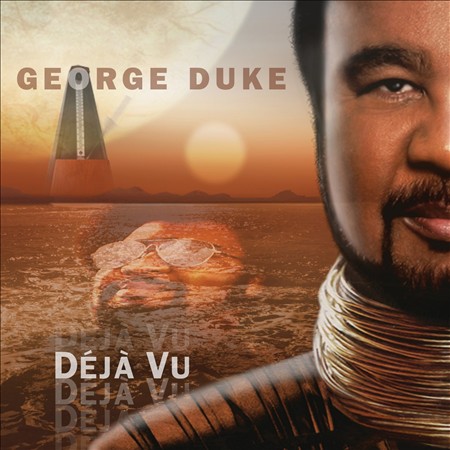
Album NotesWhen keyboardist-composer-producer George Duke made a return trip to the heyday of funk on his 2008 recording, Dukey Treats, he reminded his fans and the music press of exactly what made the good old stuff so good. DownBeat called it “a wild and crazy album, especially if you’re nostalgic about the guitar-scratching, double-clutching rhythms of James Brown and George Clinton and the bedroom ballads of Stevie Wonder and Aaron Neville.” The Philadephia Enquirer called it simply “a valentine to funk.”
Duke returns to that same wellspring for Deja Vu, his new recording on BPM/Heads Up International, a division of Concord Music Group. Set for release on August 10, 2010, the album revisits the synthesizer sound that characterized some of his most memorable recordings from the golden age of funk and soul.
“The whole idea behind Deja Vu was to take a look back at some of the stuff I used to do that was a little more musically challenging,” says Duke. “In some way or another, whatever happened before always comes around again. It may be a little different, but it will resurface. That’s kind of what this album is – a resurfacing of some ideas I had back in the ‘70s when I recorded albums with a lot of synthesizers, like Feel and The Aura Will Prevail.
Still, Deja Vu does feature a few more shades of straightahead and contemporary jazz than its predecessor – as evidenced by fine guest performances throughout the record by trumpeter Nicholas Payton, flutist Hubert Laws and saxophonist Bob Sheppard. “These are three very strong instrumentalists,” says Duke. “We do it here just like we did in the old days. Everybody gets a shot at playing. It’s not just me playing a solo and then we take it out. I try to keep it a little more democratic. It’s the typical jazz scenario of the old days, where everybody gets to play.”
The album opens with the simply titled and breezy “A Melody,” a Latin-flavored track embellished by an intriguing synth solo from Duke. “I hadn’t put a Latin tune on any of my records in a while, and I really love that Brazilian kind of thing,” he says. “I really wanted to include something like that on this record, but with a different twist.”
The funky and sensual “You Touch My Brain” was originally written for Dukey Treats, but never recorded. “I put it together for this record using some weird old clavinets and Wurlitzers and other vintage instruments – stuff that would give it that vintage ‘60s sound,” says Duke. “I had everyone in the room at the same time for that track, and we just did it, so it has that spontaneous feel.”
“What Goes Around Comes Around,” co-written by Duke and saxophonist Everett Harp, lays an easygoing horn melody atop a tricky, syncopated backbeat. As an added surprise, Duke takes a turn behind the drum kit in addition to manning the keyboards.
At first shimmering and exotic, then rocked up and edgy, “Ripple in Time” is Duke’s tribute to Miles Davis that features Oscar Brashear on trumpet. “It was fun to have Oscar do his Miles imitation on this track,” says Duke. “It conjures up that period for Miles in the ‘70s when he was doing some of his more funky stuff with the strange chords underneath.”
The midtempo and energetic “6 O’Clock Revisited” is a refashioning of a track that Duke originally recorded in the ‘80s. This version adds lyrics to the instrumental original, with the father-and-son team of George and Rashid Duke sharing the vocals.
“Stupid Is As Stupid Does” is a rollicking free-for-all that features the triple threat of Payton, Sheppard and Laws. All three are given plenty of room to stretch out on their own and exchange riffs on a track that’s held together by the solid drumming of Ronald Bruner, Jr., and Duke’s intriguing synth work.
In the final analysis, Deja Vu is a glance back, but with a very contemporary sensibility – a piece of work that comes together very much in the present, but also conjures up a persistent feeling of something great that came before. “I’ve always considered myself a multi-stylistic artist,” says Duke. “I try to take people on a musical journey, whether it’s on an album or in a show. I think the style of music that you choose to play is really irrelevant, as long as you’re honest about what you’re trying to present.”
Tracklist:
01. A Melody (4:31)02. You Touch My Brain (6:23)
03. What Goes Around Comes Around (5:35)
04. Bring Me Joy (4:48)
05. Ripple In Time (6:33)
06. Oh Really? (5:53)
07. 6 O'Clock Revisited (4:27)
08. Come To Me Now (5:50)
09. Stupid Is As Stupid Does (6:42)
10. Deja Vu (5:06)
Deja Vu

Rapidshare / Hotfile @ 256-320K


